
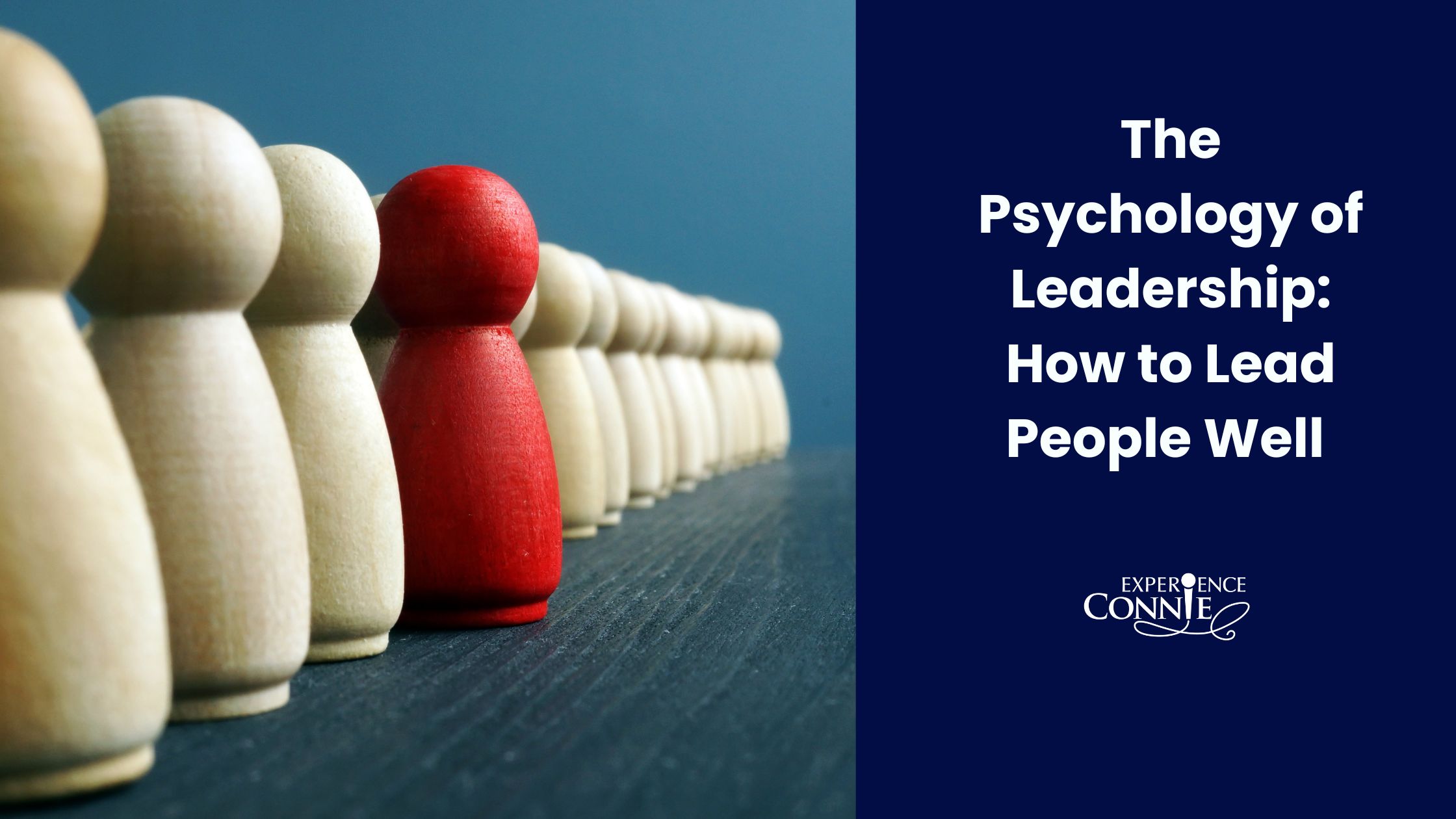
Strong leaders use psychology to understand behavior, communicate effectively, and turn people challenges into productivity, performance, and real business results.
The psychology of leadership is simple at its core: strong leaders understand why people behave the way they do, and they use that understanding to communicate better, reduce friction, and get better performance from their teams.
Let me tell you something most leaders don’t want to admit out loud: your biggest business problems are rarely about strategy, systems, or even skill. They’re about people.
More specifically… how people think, how they react, how they communicate—and how often leaders completely miss what’s actually driving those behaviors. That’s where psychology comes in. And when you understand how to use it? Everything changes.
Because psychology isn’t fluff. It’s not theory. It’s not “nice to know.” It’s how you get results.
Why Do Employees Under-perform? (Hint: It’s Often Not Motivation)
Most employees don’t under-perform because they’re unmotivated. They under-perform because of friction: unclear expectations, poor communication, and feeling misunderstood.
Most leaders assume that if someone isn’t performing, it’s a motivation issue. Not always. What I’ve seen over and over again is this: people don’t resist doing their jobs. They resist confusion, lack of clarity, and feeling like nobody’s actually listening.
So, if your team is under-performing, before you jump to discipline or deadlines, ask yourself:
- Do they know exactly what success looks like?
- Do they feel heard—or managed?
- Am I communicating in a way that actually lands… or just talking?
Because when people feel friction, they disengage. And disengaged people don’t produce. This isn’t just my opinion. According to Gallup’s State of the Global Workplace 2026 report, only 20% of employees worldwide are engaged at work, the lowest level since 2020, and that disengagement costs the global economy an estimated $10 trillion in lost productivity. That’s what friction looks like at scale.
How Should Leaders Manage Inconsistent Performers?
Leaders should manage inconsistent performers by adapting their approach to each person, because different personalities respond to different kinds of leadership.
Let’s clear something up. Leading high performers? That’s easy. They’re already wired to win. Your job there is simple: don’t get in their way.
The real test of leadership is how you handle the people in the middle—the inconsistent performers, the ones with potential, the ones who frustrate you. That’s where most leaders either step up… or check out.
Here’s the teaching moment: if you lead everyone the same way, you’ll lose half your team.
Some people need autonomy. Some need structure. Some need recognition. Some need direct, no-nonsense feedback. And if you don’t know which is which, you end up creating resistance instead of results.
How Can Psychology Help Leaders Understand Employee Behavior?
Psychology helps leaders see that behavior isn’t random. People act the way they do for a reason, and once you know the reason, you can respond strategically instead of emotionally.
One of the biggest breakthroughs for leaders is realizing that behavior makes sense when you know what to look for:
- The employee who pushes back? They may value control.
- The one who avoids conflict? They may fear rejection.
- The one who overtalks in meetings? They may need recognition.
When you understand the why behind behavior, you stop reacting and start leading. Once you know what drives someone, you can communicate in a way they actually hear, motivate them in a way that matters to them, and address issues without escalating the drama.
That’s leadership.
Why Is Micromanagement Bad for Teams?
Micromanagement hurts teams because people hear it as “I don’t trust you,” and once trust goes, initiative goes with it.
Leaders who micromanage usually think they’re being thorough, involved, or helpful. But what your team hears is a lack of confidence in them. And people who feel distrusted stop taking ownership.
The fix isn’t to check in more. It’s to get clear on expectations, outcomes, and ownership, then step back and let people do what you hired them to do.
Psychology teaches us this: people rise to expectations they believe they can meet. So the question becomes: are you setting them up to succeed… or hovering in a way that makes them second-guess themselves?
How Do You Know When an Employee Isn’t the Right Fit?
An employee may not be the right fit when they consistently drain more energy and momentum from the team than they contribute, and they aren’t coachable or committed to improving.
Here’s the part some leaders avoid. Understanding people doesn’t mean keeping everyone. One of the most important leadership skills is knowing who to develop—and who is disrupting more than they’re contributing.
Psychology gives you clarity, not just compassion. It helps you identify who is coachable, who is committed, and who is draining energy and momentum from everyone around them.
Because protecting your culture is just as important as building it.
How Can Leaders Evaluate Their Own Impact on a Team?
Leaders can evaluate their impact by honestly asking whether they’re clear, approachable, and consistent, because recurring team problems often trace back to leadership habits.
This is where it gets real. If there’s consistent tension, miscommunication, or under-performance on your team, at some point you have to look in the mirror. Not to blame yourself—but to evaluate yourself.
- Are you clear… or assuming people “should know”?
- Are you approachable… or intimidating without realizing it?
- Are you consistent… or reactive depending on the day?
Great leaders don’t just assess their teams. They assess their own impact on those teams. That’s where growth happens.
Recommended Reading: Top 10 Things Leaders Quit to Stop Feeling Lonely at the Top
Why Psychology Isn’t Optional for Leaders Anymore
The leaders who win today—the ones building productive, loyal, high-performing teams—aren’t guessing their way through people problems. They understand behavior. They adapt their communication. They lead with awareness instead of assumption.
And the payoff? Better collaboration. Stronger retention. Higher productivity. And yes—better bottom-line results.
Because when people work better together, everything works better.
Frequently Asked Questions
What is the connection between psychology and leadership?
Leadership is about getting results through people, and psychology is the study of why people think and act the way they do. When leaders understand the motivations behind behavior, they communicate more effectively, handle conflict better, and build stronger teams.
How do you lead different personality types?
Start by noticing what each person responds to. Some people thrive with autonomy, others need structure, recognition, or direct feedback. Adjusting your approach to the individual, rather than leading everyone the same way, reduces resistance and improves performance.
What are the signs a leader is micromanaging?
Common signs include frequent unnecessary check-ins, redoing work instead of coaching, requiring approval for small decisions, and team members who stop taking initiative. The fix is setting clear expectations and outcomes, then trusting people to deliver.
How do you motivate an inconsistent employee?
First, make sure they know exactly what success looks like and feel heard rather than managed. Then figure out what drives them, whether it’s recognition, autonomy, or clear structure, and lead in a way that speaks to that.
What does a leadership keynote on psychology cover?
My keynote on the psychology of leadership shows leaders how to read behavior, adapt their communication to different personalities, reduce team friction, and address performance issues without drama. [Adjust to match the actual program.]
Bring This Conversation to Your Organization
If you’re ready to help your leaders communicate more effectively, reduce friction, and get more out of the team you already have, let’s talk.
I’ll show your leaders how to read the room, respond with purpose, and lead in a way that actually works—where it counts most.
Ready to start this conversation for YOUR Leadership team? Let’s Talk!
About Psychology of Leadership Expert Keynote Speaker Connie Podesta
Connie Podesta is a leadership keynote speaker who combines her background in both comedy and therapy with over 40 years experience helping organizations like build stronger, higher-performing teams.
Want to learn more about bringing this topic to YOUR organization? Give me a call. Let’s find a way to make your leadership team the best in your arena!