Welcome 2011!
by Motivational Speaker Connie Podesta
This year I made just one New Year's resolution--that I would NOT make any New Year's
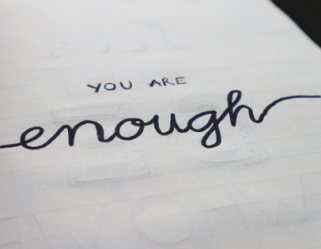
resolutions. Why? Because resolutions are usually about what I'm doing wrong (and want to make right) or what I need to do (and haven't been doing) or what I've been putting off (and need to start doing NOW!). In other words, resolutions--although they sound positive and strong--are really focusing on what we didn't do, failed to do, wanted to do, need to do, or should do. ENOUGH, I said to myself. To be honest, I'm tired of setting goals that keep my attention on what needs to happen down the road and instead I CHOOSE to focus on each day, each hour, each moment and simply do my best step by step.
How do I feel? Liberated! Excited! In charge! Hopeful! And definitely less stressed!
So what is different this year than every other year? Interesting question. My new book came out recently, Ten Ways to Stand Out From the Crowd and I finally read it from cover to cover last week.
I must admit that I LOVE this book. (I know it's mine--but truthfully I have a couple of other books that aren't nearly as cool as this one!) It was my favorite to write and my favorite to read. Plus, I wrote it with my very best friend so that was the icing on the cake. This book is fun, colorful, dynamic, memorable and unlike any book you have ever read. I promise! But most important, it is so full of heartfelt ideas that I really believe that it will absolutely change the way you think, feel and react to whatever life throws your way.
The topic should resonate immediately. Don't you want to STAND OUT from the crowd? If there ever was a time to differentiate yourself and be recognized as a valuable and essential person--it is NOW! Find a spot that is quiet and treat yourself--you deserve to go on a journey that will inspire you, challenge you, educate you, and propel you to make 2011 the absolutely best year ever!
Happy New Year!
Read MoreOvercoming the Challenges of Change
by Motivational Speaker Connie Podesta
Being a professional motivational speaker is such an awesome job--but sometimes something happens at an
event-- that even for an old seasoned pro like myself--makes me so glad I do what I do. First of all, Colorado Springs is one of my all-time favorite places, especially when it gets me away from the 100 degree heat of Dallas. The event audience was mostly guys who sell to small, family-owned businesses. One of the topics I was asked to touch on was....social media!
So I started by telling my story "Texting Harry" which is also the title of one of my books. It's a story about one person's willingness to re-think options, re-assess the desire to learn new things and re-evaluate how to fit into a future where change happens at the click of a mouse. In Harry's case, texting and social media were just two examples of the many changes he was resisting.
I asked the audience how many understood and used text messaging to communicate--only half the audience raised their hands. But one guy stood out from the crowd--as he crossed his arms and shook his head from side to side. I approached him and asked "So what do you think about learning to text?" His answer was immediate, "No way." "Why", I asked. "Because I don't need it and I don't want it." This is where my psychology comes in handy because I know that his answer probably meant "don't know how and not sure I could figure it out". I looked down at his nametag and said ,"Robert. See that young lady up in the front row? (a very cute young woman I had met earlier.) Well, what if, Robert, during your break she agreed to spend thirty minutes with you and show you how to text. And...if you are able to text me a message by the time break is over I will give you copies of all of my books as a gift plus an hour of free coaching? What do you say about that?"
Well,, he took a look at Jodi, then back to me, then to the pile of books sitting in front of him, grinned and said ,"Sure. Let's give it a try". The audience loved it! Guys who had known Robert for years left the room slowly, more anxious to see Robert learning to text than to go grab a cup of coffee during their break. Some even stayed in the room at the back, not wanting to miss the show.
I watched Robert. At first he was a bit nervous, then he started asking Jodi questions, then he took the phone in his hands and listened to her directions, and then...he texted me. It said: "Connie, this is Robert. And this is my first text!" When the group got back in, Robert came up front and as I read his text, his friends cheered him on. Then I noticed the coolest thing.....Robert had the biggest smile on his face. "So tell everyone, Robert, what learning to text was like." Smiling, he said with pride, "At first it was hard, but you know guys--this is easy. You should try it. I'm so glad I did it."
You and I both know, this really isn't about learning to text. It's about learning anything that's new or different or scary or out of our comfort zone. The cool part is that the pleasure of achieving something new is so darn much fun. And it certainly beats the stress of being out of the loop and feeling left behind. What do you need to learn that you've been putting off? And what's stopping you from moving ahead? Think of both Robert and Harry--when we stop learning we stop growing--and no of us can afford to have that happen.
Read MoreHow To Demonstrate Value to My Company
By Motivational Speaker Connie Podesta
Last time I introduced you to the eight high performance behaviors that can give you the best odds of staying employed. Remember we are NOT talking about necessarily keeping the job you have, but rather focusing on how you can keep income coming in regardless of what may happen to the particular job you have at this moment. I am interested in you having the skills necessary to STAY EMPLOYED even if something were to happen to the job you have. Think of yourself as the CEO of your career. YOU are in charge. And, as a result, you may have one client (job/company) or you may have several clients. When one client is gone (downsizing, layoffs, restructuring, etc.) your number one goal is to do whatever is necessary to begin working with a second client (job, company). It is important that YOU take charge of your career and not feel you are the victim in the world of employment.
Connie, one of the eight high performance behavior you mentioned in your last blog was "Demonstrate that you add value to the organization". This is much easier said than done. Most of my job goes unnoticed or worse yet, someone else takes credit for it. I don't work directly with any customers and I'm not in sales so I can get my results and numbers noticed. And I am certainly not the type to go around bragging and blowing my own horn. So how do I get noticed when my name comes up for discussion as to whether I should be the one to stay or go?
My first question is this: Why aren't you comfortable being you own best advocate? That attitude is both self-limiting and self-defeating. I'm definitely not asking you to brag, lie or embellishment your actual accomplishments, but letting people know what you contribute and how you bring VALUE to your organization is definitely part of your job if you want to keep it. Mangers and bosses today are usually swamped--just as you are. They may not always be aware of the extra things you do and bring to the table. YOU had better let them know--through reports, e-mails, discussions that you are a VITAL part of the organization. Vital means necessary to existence, essential. Write down what you do in a business-like manner whose tone suggests you are simply keeping them in the loop. Now you BOTH have documentation which could come in handy later.
Second, your comment, "I don't work directly with customers." My first suggestion is that you need to broaden your definition of "customer". You co-workers are your customers, your vendors are your customers, and everyone else you interact with throughout the day are your customers. Your job is to keep them engaged, informed, up-to-date and be the one they can count on to do your part of the job as it pertains to their role in the company. It sounds as though you might not believe, first and foremost, that what you do is VALUABLE and linked to the ongoing financial success of your company. Your job is to work directly with the people who work directly with customers. Their ability to do their job should be enhanced and made easier when you do your job. There is your link to the outside "customer". YOU must believe that your job is important and fits into the overall vision of your company. If you don't see yourself as part of the big picture, then no one else will either. The belief that you bring VALUE must begin with YOU.
Your next comment, "I'm not in sales" is just not true. Open your mind to a new definition of "sales". Everyone is in sales, needs to be in sales, and is, quite honestly, expected to be involved in sales--including YOU. The term "sales" no longer applies to just the process of selling a product or service--it applies to almost every interaction you will have at work. Selling can be in many forms--you may be selling ideas to another department, designs to other staff, persuading your boss to try new things, using new skills to help your team--but your ability to encourage, persuade, change and motivate people to action is a skill that never goes unnoticed and is extremely valuable in today's workplace. So how are your "sales" going? Selling yourself, selling your ideas, and selling your value and worth to this company are important sales that you need to be making every day.
The time when an employee could simply come to work, do the job and go home has passed. Now commitment, vision and top performance have become an integral part of every job. Are you creating visibility for yourself in your company? Do the people in decision-making roles know who you are and what you do that contributes to the success of your organization? If not, then begin today to change that. Begin by selling YOURSELF!
Technocrati code tag: CDEVUYM8AB68
Read MoreWhat Can I Do To Guarantee My Job?
An Q& A With Motivational Speaker Connie Podesta
Question:
Connie, although I have no reason to believe my job is in jeopardy, I still worry. Everywhere I turn I meet someone who has been laid off, fired, or let go. I go to work each day and try to do my best, but I'm not sure that is enough anymore. My boss is not very good at communicating what he needs or expects and rarely gives me feedback. What can I do to guarantee I will keep my job and stay employed, especially in tough times?
Answer:
You are not the only one to ask this question. I hear it from people everywhere, in every industry who ask: "Just what exactly is my company (or school, hospital, organization, association, etc) looking for? What do they want me to do? I don't understand how they decide which employees will keep their jobs and which ones won't?" Sound familiar to you? Companies will even admit to me that they haven't identified their standards themselves and are only depending on vague descriptions in their employee handbook. Or that their standards for high performance can vary from manager to manager or department to department. Often management finds it difficult to communicate to employees what they want or expect, especially when it comes to the tough discussions about areas that need improvement.
So in order to answer your question I relied on my research. I interviewed hundreds of business owners, human resource directors, CEO's and managers and asked them:
"You have two employees, both technically competent, but you have to let one of them go due to downsizing, mergers or budget constraints. What abilities or behaviors are you looking for to determine which employee will stay or which one you would fight to keep?"
What I discovered was that most of them were in remarkable agreement about the high-performance traits they looked for in determining who goes and who stays. Basically, their responses fell into eight categories. In fact, the information they gave me was so eye-opening that I co-authored a book, "How To Be the Person Successful Companies Would Fight to Keep" where I talk about each of the eight behaviors at great length so employees everywhere could finally have a clear guide to what they needed to do to increase their odds of staying employed.
The good news is: I can certainly help you learn the "insider's secrets" to keeping your career on track. First, however, let me focus on your very last question which was "what can I do to guarantee I will keep my job and stay employed?" There are two issues we need to discuss. One is the word "guarantee". The fact is--there are no guarantees when it comes to job security. Things happen, goals change, life moves on. It is definitely not like the old days when a person found a job, stayed with it for 30 years, retired and got a pension. So planning for the possibility that you may have to change jobs--maybe even more than once-- is a reality that's here to stay.
Second, keeping the job you have now and staying employed are two different things. My goal is to help you stay employed, even if the job you have now goes away. Ironically, if your primary goal is to keep the job you have no matter what, you may be putting yourself at risk. I have observed that many employees who are desperately trying to keep their job, as is, can become reactive rather than proactive. They react with fear and anxiety which, in turn, causes them to be territorial and resistant to change. They react defensively, hoard information that needs to be shared, and have a hard time working well as a team because they are focused strictly on "their job" rather than looking at the big picture. In other words, they display exactly the opposite behavior of what today's companies are looking for in a successful employee. To stay employed, you have to picture yourself as "employable" and that means keeping all of your options open, keeping your skills up to date, networking with people outside of your workplace, developing contacts and allies within your workplace, and learning exactly what it is that top organizations are looking for when it comes to employees they would fight to keep. My goal is help you learn the skills you need to stay marketable and continue to earn an income in a fast-paced, ever-changing world no matter whether it is your present job or the one you may have down the road.
So what are these eight "magical" behaviors that can perhaps determine whether you stay or go, get promoted or not, or get hired or passed over? Because the question you should be asking yourself is:
"What abilities or behavior must I have or develop in order to stay employed?"
Here they are:
- Take charge of your personal life--in other words, leave it at home.
- Demonstrate that you add value to the organization. They have a good reason to keep you.
- Make sure your attitude has a positive impact on your company, customers and co-workers.
- Accept change. Embrace change. Even initiate change.
- Don't waste time--figure out ways to be more productive.
- Communicate openly and directly so you can develop strong, healthy relationships.
- Look for opportunities to stand out from the crowd and be a positive role model. Leadership is not a title, it is a way of life.
- Continue to learn new information and skills and focus on your strengths.
How do you rank when it comes to these integrating these eight high-performance behaviors into your job? To find out, take my assessment which is self-scoring and see how you rank among other top professionals in your industry. With that information as a starting point, you can take the first step to insuring your future employment. Now that's priceless.
In the weeks to come, I will be referring to these eight high-performance traits as I answer questions from people who are interested in one thing:
HOW TO STAY EMPLOYED IN TOUGH TIMES
Read MoreHow Can I Deal With A Difficult Co-Worker?
A Q & A With Motivational Speaker Connie Podesta
Question:
My boss called me in to his office the other day. He told me that he thought my "attitude" lately had been getting in the way of me doing my job well. I resented this very much and I want to know what I should do. A lot is going on in my personal life right now, and I may not be the happiest person all the time, but I still manage to get to work everyday, and I try to do my job the best I can. I think my personal life is none of his business. What do you think?
Answer:
I think you need to reaccess your situation more honestly. If you are bringing your personal life, feelings, and emotions into the workplace then YOU are the one who is making it your boss's business. Attitudes, whether positive or negative, are very contagious and can have an amazing impact on your colleagues, your customers and your productivity...and it is your boss's job to notice those changes. People often underestimate the power their attitudes and behaviors have on the overall health of an organization and it's future success. Your co-workers have problems of their own and should not have to deal with yours. Your customers deserve your total support and attention. You, yourself, would benefit more if you took a mental break from your problems and focused on doing a great job. A great motivator when life isn't going as planned in one area of our life, is to take control and make sure we are as successful as possible in other areas of our life. So instead of resenting that your boss simply pointed out what was true, turn his perception around and prove him wrong. Show him that your attitude and performance is not determined by events outside of work.
Read MoreHelping People Understand People
By Motivational Speaker Connie Podesta
Several times a week I get e-mails that
are very similar in nature. According to my clients, audiences, and readers, difficult people seem to be everywhere!
People tell me that they are being nagged at home, controlled at work, pressured in social circles, and subjected to negative thoughts, attitudes and behaviors in all areas of their lives. As one reader said; "It is hard enough to stay positive with all the things going on in my own life without having to deal with everyone else's problems and gripes". I believe most people are looking for advice, help and suggestions on how to stop the insanity and enjoy life more. And I CAN help them do just that! The first step is learning to understand more about what makes people do what they do and say what they say-in my world it is called the psychology of human behavior. I have spent most of my adult life Helping People Understand People so they can develop better relationships, look forward to the future, become more passionate about life and experience a sense of peace that often eludes them now.
So beginning today, I will help you learn to understand what makes people tick step-by-step. You are going to be amazed at how different (and easier) your life can be when the reasons behind people's behaviors, thoughts, and attitudes become clearer to you. My goal is for YOU to be in charge of your life. I want you to have the knowledge and skills necessary to be able to ACT, rather than REACT to difficult people and situations. There's no time to waste. Ready?
Let's start with the basics: why do difficult people act the way they do? Could you have written the following letter? If so, then you are going to LOVE the transformation you will make over the next few weeks.
Question:
Help! I have someone in my life who is absolutely driving me crazy. I have tried everything, but no matter what I do I can't change her behavior towards me. She is rude, selfish, and seems to get her way all the time. I am a good person and I try to appease her to avoid confrontation, but I find that to do that I have to give up things I'd like to do or want to have. Is that fair? Please tell me what I can do or say to change this situation.
Answer:
Life Would Be Easy… If It Weren’t for DIFFICULT People
Go on, it’s okay. Admit it! We all know that life would be a whole lot easier if we didn’t have to deal with those few (or many) difficult people we just can’t seem to avoid. I think you know who I’m talking about.
What’s not okay is to give up something you need, want, or deserve because of their rude, obnoxious, sullen, and apathetic habits. Yes, I do mean “habits.” If you’re tired of playing their game, take charge of your life by taking a good look at yourself! You can not change them, but you can change what you do and how you act around them—and ultimately how they affect your life.
The Good News… and the Bad
Difficult people have been trained and taught to act the way they do since they were children. In fact, they have been rewarded for their negative behavior throughout their entire lives. Difficult behavior worked for them as children, and more importantly, it continues to work for them as adults.
I believe that most of us are born with the capacity and desire to love and be loved. As we grow, we learn to respond to verbal and visual cues, and we begin to adjust our behavior to obtain the positive responses we want. Children who can manipulate their parents soon learn to enjoy feelings of power and control over others.
The game of life is basically about getting our needs met. And you certainly do play a part! We reward difficult people by giving in to their needs. Think about it. If someone’s behavior is consistently inappropriate or unacceptable toward you, ask yourself if in any way you are rewarding their negative behavior.
For example, Helen gets upset every time Harry mentions that he wants to play golf. Rather than face a two-hour lecture, Harry usually finds it easier to just stay home. One day, however, he gets angry and accuses her of being a nag who never understands him. Instead of answering back, Helen gets her feelings hurt, stomps off, and gives Harry the silent treatment. He takes advantage of her “cold shoulder” and plays a few holes of golf!
Jennifer wins the same “reward” at her new school. Few of the kids would talk to her and some were even making fun of her. She asked to stay in during recess, but the teacher said no. Eventually she gets into a fight and pushes another girl down. The teacher tells Jennifer that fighting is against the rules and she will have to stay inside. What did Jennifer learn? Ask the teacher respectfully and you will not get what you want. Push someone and you can avoid recess!
We have three choices each time we respond to another person: 1.) be positive; 2.) be negative; and 3.) avoid or ignore them. Difficult people see avoidance as a positive response. When we ignore unacceptable, inappropriate behavior, it will usually happen again because our avoidance tells the difficult person that we are willing to accept their behavior.
What do they really want?
Difficult people want to do their own thing, in their own time, in their own way, without interference. In addition, they expect everyone around them to cooperate – even work extra hard – to ensure that this happens. And they do not see anything unreasonable about these expectations. There is little in their experience to signal them that their actions are inappropriate. They also have little (if any) desire or motivation to change their habits.
What can I do about it?
We learn a lot from difficult people. We tolerate their behavior and attitudes as “part of life.” We hold back our feelings and swallow our words. We make concessions even when we do not receive anything in return. We compromise even when it is 90/10 instead of 50/50. We may even question our own ability to relate and communicate with others reasoning that, “Maybe it’s me.”
Since we cannot change difficult people, we can only change ourselves and our reactions to their behavior. They need our cooperation and our permission to intimidate, control and repeatedly manipulate us to get their way. In most relationships, we are treated exactly the way we allow ourselves to be treated. The good news is that because we are partly responsible, there is something we can do to create and maintain relationships where we are treated respectfully. That’s great news! By focusing on ourselves and the changes we can make in our own behaviors and reactions, we can begin to take control of how other people treat us – today!
Take Action!
Think about two difficult people in your life.
Identify the behaviors of these difficult people.
Ask yourself if you could possibly be rewarding these difficult people.
Would they describe you as the difficult person? If so, what would they say?
Read More